Could machine learning make agricultural drones better?
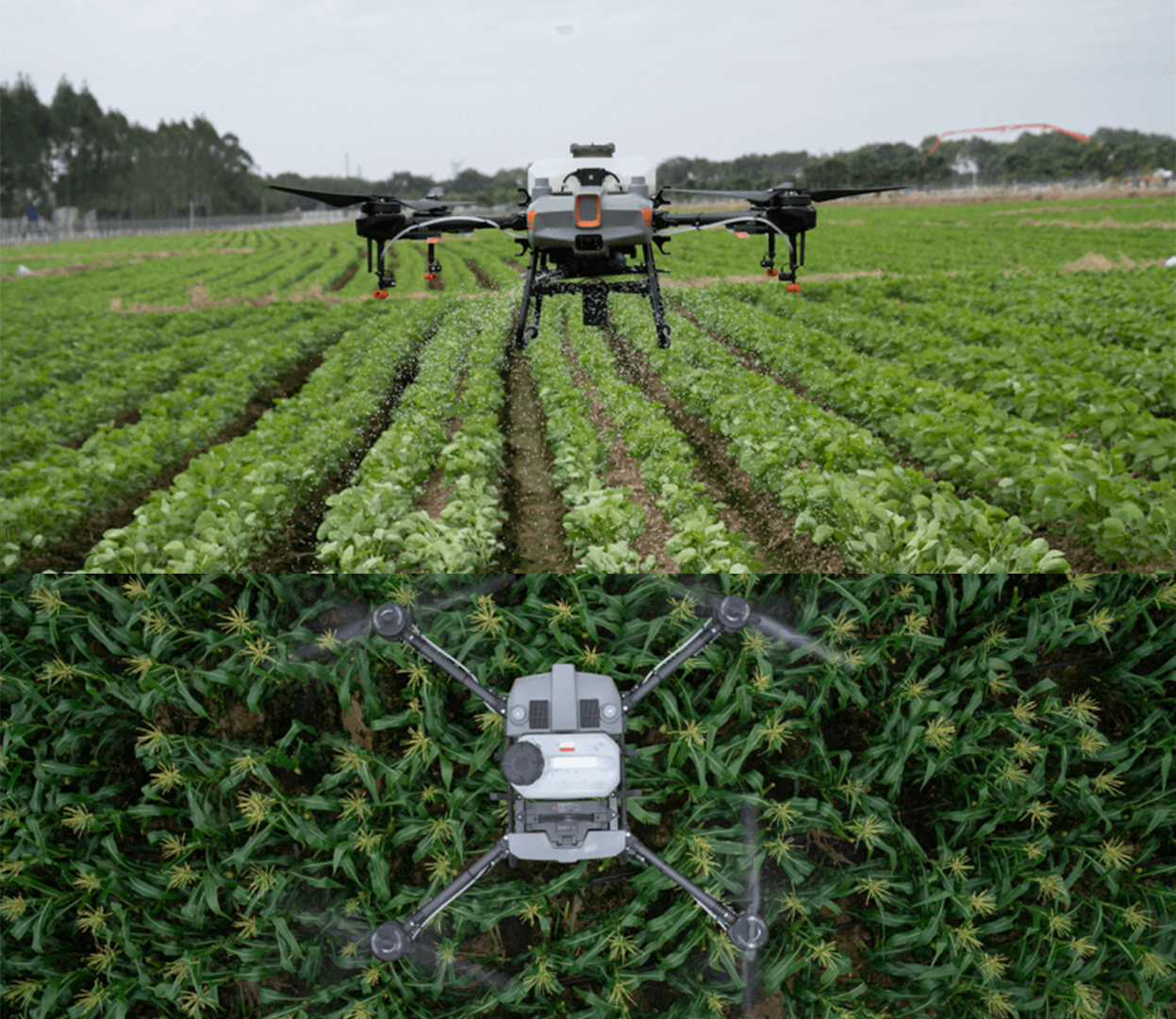
Of late, there has been a flurry of road shows by agricultural drone resellers in southern Africa, who are keen to see the spread of drone technology into farms in the region.
Armed with all the smart and precise things drone can do for farmers – crop spraying, security, crop health monitoring, aerial survey, among many other applications – it is to see why drones are becoming as indispensable to agriculture as any other machinery.
But a researcher in the USA thinks that the machine learning capabilities of agricultural drone could be made better, and help them work better and save on time and power.
Drones have become a familiar sight hovering over farms around the country, and experts say technological advances could help the unmanned flying craft revolutionise agriculture.
Somali Chaterji, Assistant Professor in the Department of Agricultural and Biological Engineering at Purdue University in Indian, USA is working to incorporate machine learning applications and on-device computation into agricultural drones, as part of an effort to use drones to increase crop yields.
As Lifewire reports, Charterji, who recently received got awarded a grant to research better ways to integrate drones into farming, aims to create a network of small devices to make drone data collection and analysis more sustainable.
The CAREER grant from the National Science Foundation’s Computer and Information Science and Engineering (CISE) Directorate for her project Sirius is worth $550,000. The title of her work is “Robust and Adaptive Streaming Analytics for Sensorized Farms: Internet-of-Small-Things to the Rescue.”

Under her plan, drones will determine their optimal trajectories, saving battery power and recharge time.
“We live in an increasingly sensorized world generating a deluge of streaming data, both low- and high-bandwidth,” said Chaterji, “An example of high-bandwidth data is video from drone surveillance. Leveraging data effectively from this continuum of sensors, static and mobile, we can convert data to decisions. This can go a long way in solving the food and ecological problems faced by the planet today.”
Drones will fly around a field, sensing soil and plant conditions to determine and spray the amount of water and nutrients needed. The system will enable the devices to reduce energy consumption using on-device intelligence.
“Our innovation distributes the computation, and each device can decide to transmit only the useful quanta of data, instead of a giant data deluge.
“Improved efficiencies like these will benefit the farmers and the environment by reducing the frequency of charging these devices and decreasing the reliance on cloud computation and data centres.”
Getting Smarter
Already used extensively in farming, the drones flying machines can be used for aerial scouting of crops, according to Jarrod Miller, an assistant professor with the Plant and Soil Sciences Department at the University of Delaware.
“They can help to map fields for precision applications of fertilizers and pesticides while being used to measure crop response to various types of management,” he added. “Drones also allow for precision spot spraying of fields or aerial seeding of smaller fields.”
The use of drones will become more and more important and cost-effective, especially once all these devices are connected with each other, do more autonomous operations, transmit data across each other and to the farmer, and integrate with other robotics on the ground,”
The future is indeed in the data and what to make of the data.
(For example); Agriculture is Ukraine’s largest export industry with over 41 million hectares of agricultural land, which covers about 70 percent of the country and makes up about 25 percent of the world’s reserve of black soil. So to find even better ways to utilize the land, improve farming output and reduce the cost, farmers have been searching for tools to better manage crops, especially during times of rising fuel prices and increased climate change concerns.
One of the answers is drones.
Fleets of drones to be more specific.
Not just one or two drones, but entire groups of drones flying together. Agricultural drones with autonomous operation capabilities are gaining popularity, especially in the use of precision spraying of pesticides applications. Oftentimes farmers are not able to use ground vehicles on their fields after prolonged rains and so being able to fly and inspect, and then deploy many aerial vehicles loaded with pesticides to treat just certain areas, cuts down on time, a lot of human hard labour while cutting down the amount of pesticides being used.
A current fleet of 50 XAG Agricultural Drones have been handed over to Robotic Agrosystem, which is a local Ukrainian service provider. More of these platforms will be delivered over the next few months with the plan to cultivate more than 500,000 thousand hectares of crops during the 2022 farming season; and that is still only a really small piece of all the Ukrainian farmland.
Romeo Durcher; Vice President Public Safety, Auterion

Better Drones for Better Crops
One problem with drones for farming is that they are costly, with prices for a single model ranging up to $25,000. Albert Sarvis, assistant professor and program lead for Geospatial Technology at Harrisburg University of Science and Technology reckons new, cheaper and longer-lasting drones will help make them more available to farmers.
“Five years ago, a fifteen to twenty-minute flight time was considered standard,” Sarvis said. “For the same, or lower, cost, current drones easily fly for 25 to 30 minutes. Sensor prices have also dropped 25-50 percent in that same time period.”
Future drones will become more important to farming and cost-effective once they are fully connected with remote sensors and each other, Durscher said. Once the data is collected, it must be made more autonomous with artificial intelligence (AI) capabilities, so it does not take a human to analyse the data and come up with a recommendation, he added.
Software giants like Microsoft are investing in data analytics to boost farm productivity and reduce time and resources. Microsoft Azure FarmBeats enables developers to build artificial intelligence or machine learning models based on fused data sets. “That allows the assessment of farm health, get recommendations on how many soil moisture sensors to use and where to place them, track farm conditions and more,” Durscher said.
High-speed wireless 5G networks that are being rolled out could make drones even more useful. Networks using drones with high-definition cameras are becoming popular for agriculture, Steven Carlini, vice president of innovation and data centres at Schneider Electric, which provides solutions for automated farming, said.
“With a private network, the owner can prevent things like data capping and speed throttling,” he added. “There is the potential for tremendous amounts of data generation enabled by 5G. It is impractical and costly to transmit data across long distances—local edge data centres with sufficient processing power are needed on-site.”


0 Comments