

...Drone Company Awards Grants for Humanitarian Operations
Drone services company DroneDeploy’s panel for the Resilient Futures Grant Programme has released the names of the four organisations that will be sharing this year’s grant.
The programme is focussed on fostering inclusion through facilitating situations where all communities have the necessary resources to build a resilient future; and enhancing outcomes for under-resourced populations by prioritising advocacy, safety, and efficiency through reality capture technology.
Last year, they appointed onto its board the managing director of Tanzania Flying Labs, Leka Tingitana, and Kat James, the Nairobi-based founder of drones for good consultancy, Four Hundred Feet.
“We received over 250 applications from non-profits around the world, and it was inspiring to see the diverse ways organizations are using drone and reality capture technology for social impact,” James said.
“From supporting whale conservation efforts in the Caribbean to protecting indigenous land rights in Kenya, these projects showcase the power of technology in creating a better future.”
And the winners are…

The HALO Trust
Founded in 1988 initially to deal with the landmine tragedy in Afghanistan, the Halo Trust has since ballooned into 25 other countries and territories, removing landmines and explosives in countries that include Mozambique (which was declared free of landmines in 2015), Libya, Kosovo and Sri Lanka.
The entity gained worldwide fame when Princess Diana visited one of its sites in Angola in 1997, and this famous visit resulted in the signing of the Ottawa Mine Ban Treaty, calling for all countries to unite to rid the world of landmines.
Based in the UK, the Halo Trust say it has removed 100,000 landmines and explosives in Angola since 1994, but thousands more remain, and – according to the trust’s Head of Communications, Paul McCann – it will be many more years of hard work until the country is free of these destructive remnants of war.
For the $20,000 grant from DroneDeploy, the organisation will be using the money to aid its demining efforts in Yemen, which it says faces one of the largest humanitarian crises in the world.
The conflict that began in 2015 has displaced 4.5 million people and left 18.2 million people in need of humanitarian aid.
“Despite a de facto truce since 2022, fields and cities are littered with landmines and explosives, making it impossible for families to return home. Spillover from regional conflicts threaten the fragile ceasefire,” the trust says.
“HALO established a registered office in Aden in 2019. We are working closely with YEMAC, the national mine action organisation, to clear landmines and other explosives on a large scale so families can return home. As a first step, we provided training and mentoring to YEMAC staff and surveyed land and communities to fully understand the extent of the challenge. HALO established a registered office in Aden in 2019 and in Ta'iz City in 2022.
“In the years since, HALO operations have expanded to now include explosive ordnance risk education, mechanical and manual clearance in tightly-packed urban environments and removing the threat posed by items of explosive ordnance through the destruction or safe removal. We are also clearing minefields in more rural settings.
“As the first mine action operator to use mechanical clearance in Yemen, our teams in Ta'iz are working to clear contamination in the city centre. High levels of destruction in densely populated areas demand an innovative approach to humanitarian mine action. Using armoured plant machinery such as front-loaders and excavators, operators can clear areas contaminated with debris – such as damaged and destroyed concrete – as well as explosives more efficiently and safely than manual clearance teams.
“So far, our teams have destroyed over 150 tonnes of explosive ordnance, and mechanically cleared 116,000 square meters across Aden and Ta'iz, aiding the recovery of communities affected by the legacy of years of conflict.”
The HALO Trust started integrating drone technology in demining in 2017.
“Essentially we put drones in the sky – and we’ve been doing that for a while now – to tell the extent of a minefield by using the drones to check the land-use around it,” McCann told the BBC. “But what we are now trialling on some very big minefields is a range of sensors that we can use with the drones to help us find the mines.
“So we are trialling thermal sensors, which basically pick up the temperature difference of the soil above the mine. “(The thermal sensors will return) pictures which show us exactly where the mines are because of the slightly cooler sand above them.
“We are also trialling Light Detecting and Ranging (LiDAR) cameras, which send out thousands of laser pulses every second. They bounce off objects and create a kind of picture which we can then strip off the undergrowth. We can digitally take away the vegetation, and that allows us to see where the trenches and machine-gun posts were – all of which can point to the presence of the mine line that were looking for.”
Sheffield & Rotherham Wildlife Trust
Yorkshire, UK-based Sheffield & Rotherham Wildlife Trust is a charity that collaborates with communities to safeguard and enhance the environment, creating a better future for wildlife, people and the green spaces that we all depend on.
The trust manages fifteen nature reserves including Wyming Brook, Greno Woods, and Centenary Riverside in the UK, and offer a year-round program of events and activities to inspire people of all ages to learn about nature and enjoy the great outdoors.
The Trust’s advocacy efforts are focused on protecting wildlife and green spaces, including standing up for threatened areas and empowering others to take action for nature. Its goal is to ensure that 30 percent of land and water are excellent for nature by 2030, and that everyone has access to green space within a five-minute walk from their homes.
The trust is also part of a national network of 46 Wildlife Trusts, working together for a better deal for nature and people locally and in the wider world.
It was granted $20,000 for its project proposal to use nature-based solutions to protect communities and ecosystems from devastating floods.
Help.NGO
Help.NGO is an international Non-Governmental Organisation specializing in emergency response, preparedness, risk mitigation, and prevention.
Registered as a non-profit in the European Union the organisation leverages cutting-edge technological solutions like drones and subject matter expertise to national and international disaster response mechanisms before, during, and after emergencies.
With a focus on implementing complex solutions at scale, we encourage the democratization of use and localization of capacity through research and development, training, and the prepositioning of actionable solutions.
Help.NGO is currently one of 55 standby partners of the United Nations, with work extending across operational, strategic, and administrative aspects of humanitarian and development work.
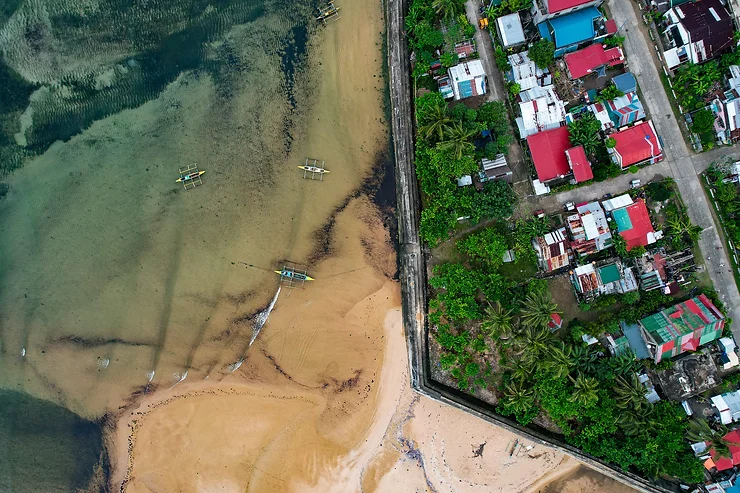
DroneDeploy awarded Help.NGO $10,000 to help restore mangrove forests to shield coastal areas and vulnerable communities from typhoon damage.
The organisation has a similar project – in partnership with Catanduanes State University and with support from Amazon Web Services (AWS) – in the Philippines, where it is mangrove monitoring and assessing mangrove forests, particularly crucial given Catanduanes' vulnerability to natural hazards, most notably typhoons.
As an island positioned on the eastern seaboard of the Philippines, Catanduanes frequently faces the initial impact of typhoons making landfall. The residents have historically adapted to these conditions, viewing typhoons as a part of their way of life. However, climate change is exacerbating the situation by intensifying the strength of these typhoons, leading to more severe impacts on the island.
With the advent of stronger and more frequent extreme weather events, the recovery period for Catanduanes' communities is extending, often without sufficient respite between successive typhoons.
“In response to these challenges, Help.NGO has committed to supporting the local communities and authorities in enhancing their resilience against such natural disasters,” the organisations.
“A significant component of this support is integrated into the Technology Advocacy and Resilience Programme, launched at the start of 2024. This initiative represents a collaborative effort among Help.NGO, Amazon Web Services, and Catanduanes State University, with the latter serving as the local research and climate change resilience partner.
“A key feature of this programme is the utilization of advanced drone mapping technology to conduct comprehensive surveys of the mangrove fields in Catanduanes.
“This innovative approach aims not only to assess the current state of these vital ecosystems but also to identify areas where restoration and conservation efforts can be most effectively applied. By leveraging such technology, the partnership seeks to develop a deeper understanding of the role mangroves play in coastal protection, carbon sequestration, and biodiversity conservation, thereby informing strategies to bolster the island's resilience in the face of escalating climate challenges.
“Through these concerted efforts, Help.NGO and its partners are laying the groundwork for a more sustainable and resilient future for the communities of Catanduanes.
“Integrating technology to minimize loss and damage during extreme weather events is a cornerstone of the Technology Advocacy and Resilience Programme. A critical element in enhancing community resilience against such challenges is the preservation and restoration of mangrove ecosystems.”
Cryospheric Society of Nepal
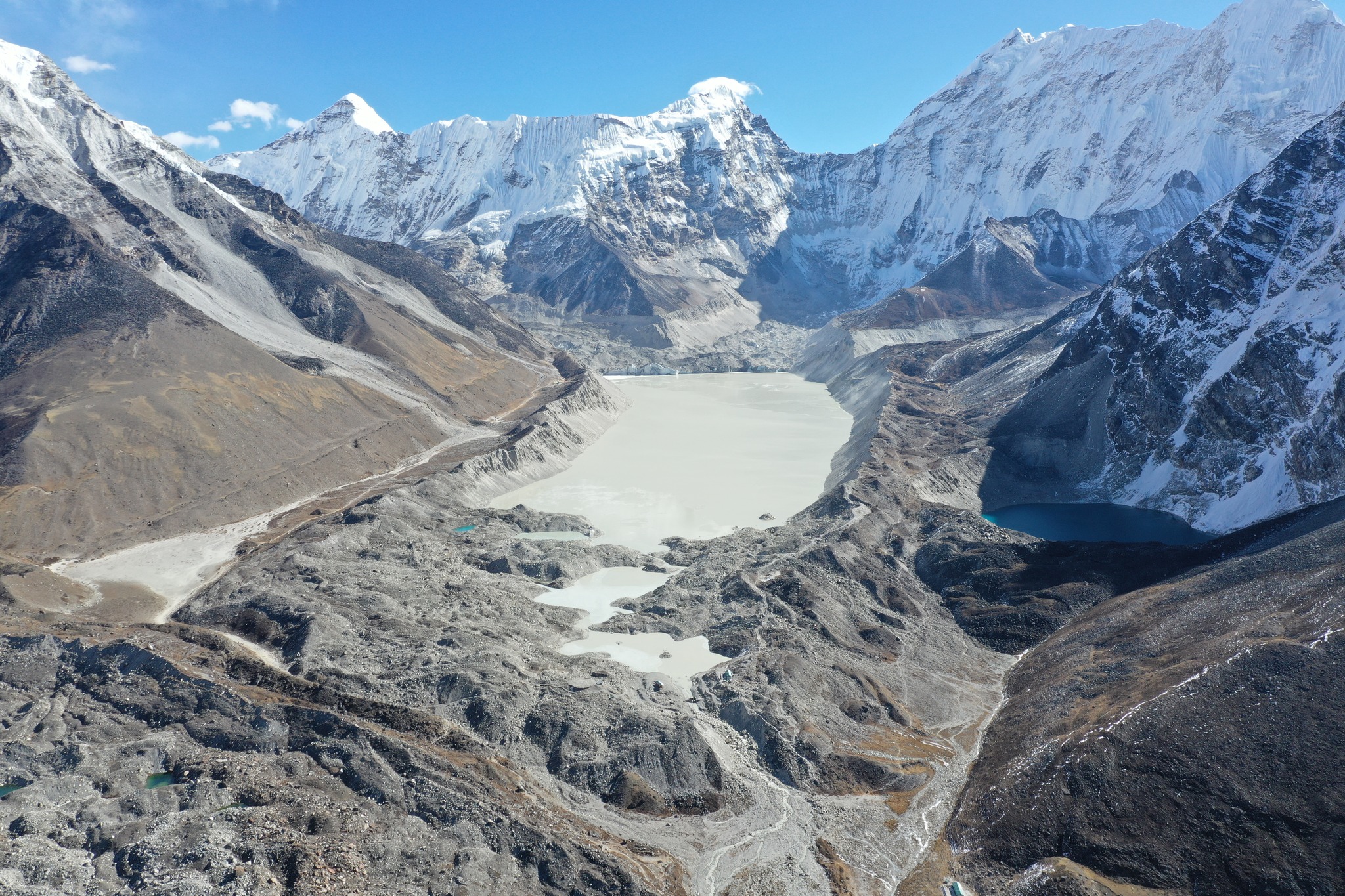
The Cryosphere Society of Nepal (CSN) is a nonprofit organisation dedicated to tackling the pressing issues arising from cryospheric changes in the majestic Nepal Himalayas. Established in 2023 and headquartered in Dhumbarahi, Kathmandu, CSN brings together a group cadre of cryosphere scientists committed to comprehensive research, education, and actionable initiatives aimed at mitigating the impacts of the changing cryosphere and its impacts on local communities and ecosystems.
The CSN's mission is to advance understanding, raise awareness, and take proactive measures to address the multifaceted challenges posed by cryospheric changes due to climate change in the Nepal Himalayas.
Through collaborative efforts in research, education, and action, CSN endeavours to foster sustainable solutions for the preservation of the cryospheric environment and the well-being of the communities it sustains.
The organisation was awarded $10,000 by the Resilient Futures programme to address the increasing risk of landslides in mountainous regions through preparedness and community resilience.