

When it comes to drone technology and helping in the eradication of poaching and other crimes against wildlife in national parks – especially Kruger National Park in South Africa – we must give this disclaimer: by 2016, Kruger National Park was ready to give up on drone technology.
Starring at the decimation of their rhinoceros and elephant population in the face, parks and wildlife officials at the national game park had turned to a local drone company for solutions on poacher detection and, hopefully, arrest.
That was in 2014. The company came in, carried out day and night patrol trials and…
…the results were a bit complicated.
Drone consultant, instructor and pilot Graham Dyer was part of the project, and actually spent two years on the ground at Kruger National Park (between 2014 and 2016) testing out the effectiveness of drone technology in detecting suspected poachers and rounding them up in good time.
“Not to put (anyone) off but some of our biggest problems were the following,” Dyer said in 2018. “Poacher detection: I flew 290 logged hours and over 17,400km and I saw just one poacher group (we flew a two-hour endurance per battery at 330ft altitude, 43km/h, viewing approximately 18ha/minute). No apprehensions or arrests for our entire team after 1000+ hrs.
“It is extremely difficult to find two or three people in thousands of hectares of African bush; it might be possible on open plains or on water; but the calculated chance of detection (in the bush) is about one or two percent. Even when flying fencelines with alarm triggers, we still failed to detect anyone, besides anti-poaching personal.”
But then again; that was in 2016; detection payloads on drones have become more advanced since then – and the Matrice 4 was not even in the minds of DJI engineers then.
But the drone manufacturing conglomerate’s new flagship machine was released in January this year: replete with its advanced AI computing platform and enhanced sensing capabilities, designed for intelligent aerial operations, including search and rescue, surveying, mapping, and inspection work; to make flight operations safer and more reliable.
The Sabi Sand Nature Reserve, which forms part of the greater Kruger National Park in South Africa, has taken the DJI Matrice 4 on board for its white rhinoceros conservation operations around its sprawling 65,000-hectare reserve.
That is a lot of real estate to cover, and below is DJI and Sabi’s account on how they are doing it.
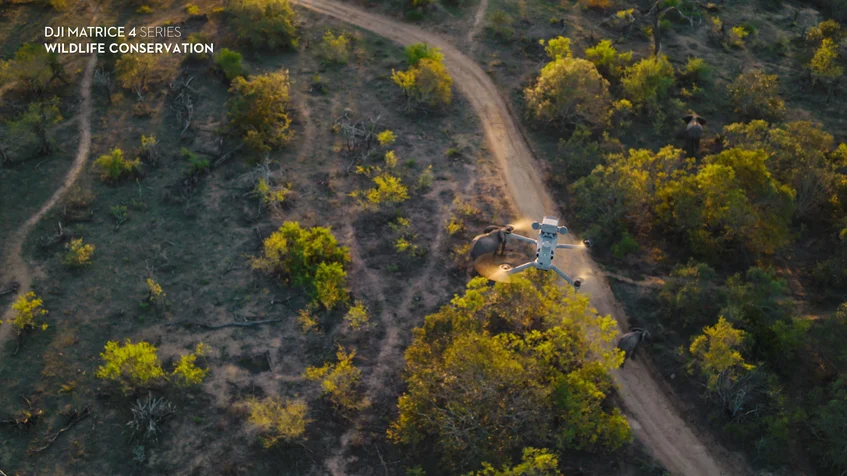
The majestic white rhino is on the brink of extinction, and conservationists are racing against time to reverse decades of destruction caused largely by poaching. Within South Africa's Sabi Sand Nature Reserve, a groundbreaking solution is making waves in wildlife protection efforts.
With its cutting-edge capabilities, DJI Matrice 4T drone is redefining how conservation teams safeguard rhinos and other endangered wildlife.
Stretching across 65,000 hectares in South Africa and forming part of the Greater Kruger National Park, Sabi Sand Nature Reserve is a sanctuary for diverse wildlife, including lions, leopards, elephants, and white rhinos.
With open systems that connect to Kruger National Park and adjacent reserves, this region provides animals unrestricted movement across vast ecosystems.
However, the reserve has faced significant challenges protecting its white rhino population. White rhinos are poached for their horns, which are then traded in illegal markets.
By 2015, poaching had reached crisis levels, with over 45 rhinos killed in a single year within the reserve. The rhino population suffered devastating losses, making population recovery a daunting task.
Conservationists had to innovate to turn the tide, and they found their answer soaring above the reserve skies.
Why Drones Are Perfect for Animal Preservation
Key benefits of drones in wildlife conservation include:
- Enhanced Observation: Drones such as the Matrice 4T monitor large areas much more rapidly than ground patrols.
- Real-Time Monitoring: Equipped with cutting-edge technology, drones detect suspicious activity, such as unauthorized vehicles or individuals entering reserves.
- Low Disturbance Tracking: Unlike helicopters, drones operate quietly, minimizing stress to wildlife.
- Cost-Effectiveness: Over time, drones reduce the ongoing operational costs associated with vehicle patrols and manpower.
These benefits have made drones an essential tool in bridging gaps in anti-poaching and security strategies. At Sabi Sand Nature Reserve, the results are astounding, with the reserve now boasting over 600 poaching-free days.
Why the Matrice 4T Stands Out
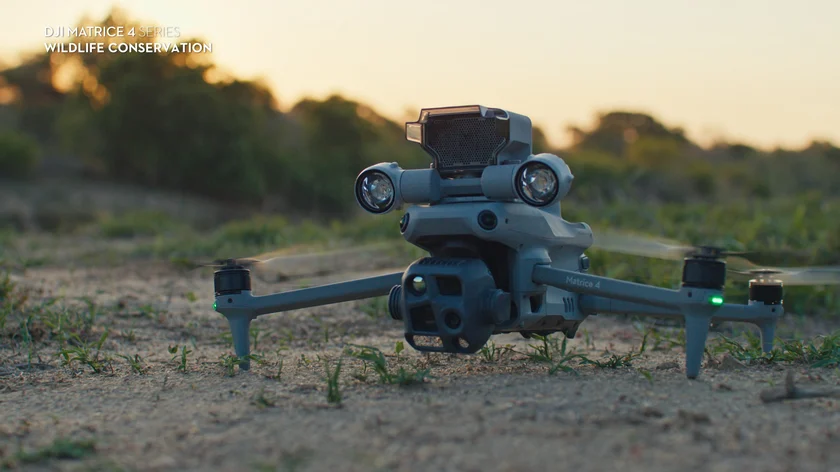
DJI’s Matrice 4T was specifically chosen by the Sabi Sand Nature Reserve team for its advanced capabilities. Here's why this drone is a game-changer for conservation efforts:
Excel in Low-Light Environments
The Matrice 4T is designed to excel in nighttime and low-light environments with its upgraded Night Scene Mode, providing clear full-colour visibility in the dark. The Matrice 4T also supports infrared High-Res Mode, offering ultra-high precision in revealing subtle temperature details.
This combined technology ensures effective operations such as search and rescue, and enhances wildlife protection efforts, allowing rangers to detect poachers and monitor animal safety comprehensively.
Multi-Sensor Capabilities
The Matrice 4T combines multiple sensors into one drone platform, including wide-angle camera, tele camera, infrared thermal camera, and laser range finders. Its exceptional tele camera capability allows for the precise capture of intricate details from the sky, such as the small ticks on a rhino's skin.
This feature enables conservationists to monitor rhino movements and assess their health without needing to approach too closely. The combined sensor versatility of the Matrice 4T ensures comprehensive data collection for various applications, including animal tracking, boundary monitoring, and detecting poacher activity.
Rapid Deployment
Speed matters when securing wildlife. The Matrice 4T has a quick 10-second takeoff feature, ensuring teams can respond to potential threats in record time. Within moments of a disturbance, drones can be in the air, scouting and tracking suspicious activity.
Intelligent Operations
The Matrice 4T is equipped with a built-in model that can detect and track specific animal species, utilizing adaptive development. Smart Track enhances this by allowing precise subject positioning and automatic zoom adjustments, making it easy to switch between and reacquire obscured subjects.
This technology paves the way for improved species monitoring during flights, greatly enhancing conservation efforts.
Accessory Integration
The onboard spotlight enhances visibility during nighttime operations, offering a focused beam of light to illuminate areas of interest, which is crucial during anti-poaching operations. This allows rangers to maintain visual contact with their targets without alerting poachers prematurely.
The speaker can be used to broadcast messages or warnings from the air, providing an additional tool for deterring illegal activities and coordinating ground teams.

What's Next for Animal Preservation with Drone Technology?
The success of drone integration at Sabi Sand Nature Reserve offers a glimpse into a hopeful future for conservation. Here's what lies ahead:
- Scaling to Other Reserves: The drone strategies employed at Sabi Sand Nature Reserve could inspire similar projects in neighbouring reserves facing poaching crises.
- Community Integration: Conservation and local communities can partner to use drones for additional purposes, such as mapping grazing areas or monitoring water sources.
- Education and Awareness: By showcasing drone success stories, reserves can rally more global support for conservation.
For conservationists, the message is clear: drones are no longer a luxury but an essential tool in tackling ecological challenges.
Safeguarding Wildlife with Innovation
Thanks to DJI Matrice 4T and the dedicated efforts of rangers at Sabi Sand Nature Reserve, white rhinos are finally starting to flourish again. Aerial technology has proven to be indispensable in creating safer habitats for wildlife, helping to turn the tides in a fight that once felt unwinnable.
Whether you’re an animal rights advocate, a drone enthusiast, or part of a conservation organization, now is the time to advocate for broader adoption of drones in wildlife preservation.